




The Hidden Cost of Steam: Scale, Corrosion and Water Quality
The value of steam in a production plant is often only realised when it is cut off. A reactor that fails to heat up, an extended cooking time or a process that cannot reach the desired temperature immediately draws attention to the boiler house. Yet, before reaching this point, the system may have been operating for a long time with minor losses. Increased fuel consumption for the same output, a rising need for blowdown and more frequent maintenance interventions are the first signs of these losses. The fact that the boiler continues to generate pressure does not mean it is operating efficiently and healthily.
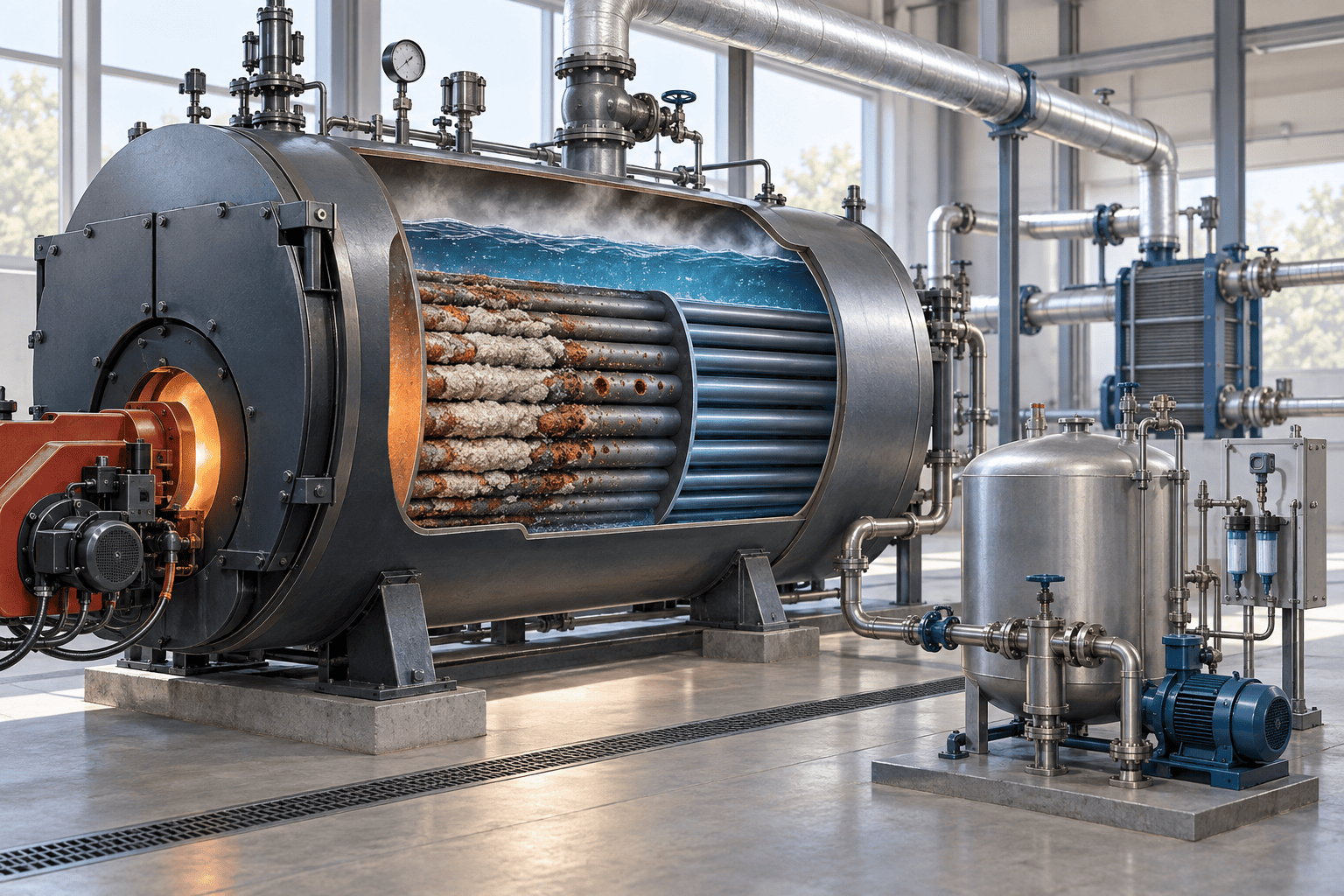
Water quality in steam production is therefore a direct component of production costs. Hardness, corrosion products and other contaminants carried by the feedwater can concentrate within the boiler and accumulate on the heat transfer surfaces. The resulting deposit impedes heat transfer between the metal and the water. Whilst meeting the process’s steam demand becomes more difficult, fuel consumption may increase. In more serious cases, the metal cannot cool sufficiently; localised overheating, deformation and tube damage may occur. The cost of these deposits thus extends from energy bills to maintenance costs and unplanned shutdowns.
Scale formation during boiler operation adversely affects the system’s operating conditions. Iron oxides carried in the condensate and feedwater lines may also accumulate on boiler surfaces. Consequently, the proper functioning of the water softening system alone does not guarantee a clean boiler surface. Scale deposits may also lead to the formation of chemical conditions beneath them that differ from those of the boiler water. Localised concentrations, particularly in areas with high heat flux, can fuel under-deposit corrosion. Metal loss beginning at one point in the system may manifest as scale and further damage at another point.
The losses incurred by the plant due to corrosion are not limited to the cost of replacing a tube or repairing equipment. Along with leaks, hot water, energy and treatment chemical actives are lost; production may need to be halted for repairs. Pitting corrosion caused by dissolved oxygen can deepen in a small area, leading to perforation. Low pH and unsuitable chemical conditions can also accelerate metal loss. Therefore, corrosion control requires a combined approach involving water treatment, degassing, chemical applications and operational monitoring.
Conductivity, pH and alkalinity, which are monitored in daily analyses, provide important information for detecting these issues at an early stage. However, each parameter reflects a different property of the water. A favourable reading for one does not necessarily indicate that the others are also under control.
Boiler water conductivity enables the monitoring of the total effect of dissolved ions in the water. As the water evaporates, the majority of non-volatile dissolved substances remain in the boiler and become progressively more concentrated. Conductivity is a practical indicator used to monitor this concentration and manage blowdown. To ensure measurements are comparable, the effect of temperature must be taken into account; results should be evaluated under the same reference conditions. The relationship between conductivity and the total amount of dissolved solids, however, depends on the composition of the water; the same conversion factor does not apply to every system.
The aim here is not to reduce conductivity as much as possible. Insufficient blowdown can lead to the accumulation of dissolved substances and facilitate the carry-over of boiler water with the steam. Excessive blowdown, on the other hand, involves the removal of heated and chemically treated water from the system. The fresh water taken in to replace this is then treated and reheated. Consequently, proper blowdown control limits the loss of energy, water and chemicals whilst maintaining water quality.
pH indicates whether water is acidic or alkaline and is a key factor in the protection of metal surfaces. However, the notion that ‘the higher the pH, the better’ is incorrect. Whilst a low pH can increase corrosion, excessive free caustic—particularly when it concentrates beneath scale deposits—can also damage the metal. It is also inappropriate to use the same pH target for boiler water, feedwater and condensate. Targets should be determined based on operating pressure, the types of metal in the system, the boiler manufacturer’s requirements and the water treatment programme being implemented.
Whilst alkalinity is related to pH, it does not measure the same thing. It expresses the water’s capacity to neutralise acid and is influenced by components such as bicarbonate, carbonate and hydroxide. Put simply, pH indicates the current state, whilst alkalinity helps to understand how resistant this state is to the addition of acid. Two waters with the same pH value may have different alkalinity levels. Therefore, it is not possible to determine whether the alkalinity is suitable by measuring pH alone. Alkalinity must be assessed in conjunction with other analyses when making decisions regarding blowdown and chemical dosing. Furthermore, carbon dioxide, which can be released when carbonates and bicarbonates decompose under boiler conditions, can be carried into the steam-condensate system.
Condensate return water is one of the most economically valuable streams in the steam cycle. It is formed by the condensation of steam that has released its heat during the process and still carries a significant amount of heat. Recovering clean condensate reduces the demand for fresh water and the costs associated with preparing it. A higher temperature of the feedwater reduces fuel consumption; high-purity condensate can also limit blowdown losses by reducing the load of dissolved solids entering the boiler. Consequently, the condensate return rate directly affects the operating costs of the boiler.
However, the quality of the returned water is just as important as the quantity. Heat exchanger leaks and process-related contamination can cause products, oil or cleaning chemicals to mix with the condensate. Corrosion in the condensate lines can also introduce metal oxides into the system. Returning contaminated condensate to the boiler can turn the recovery benefits into maintenance and operational losses.
Therefore, continuous monitoring of conductivity and temperature in the condensate return helps to detect sudden changes at an early stage. Conductivity monitoring is particularly useful for ionic contamination; however, it should not be regarded as a sufficient control measure on its own to detect all contaminants. Depending on the nature of the process, it must be supported by analyses of pH, iron, oil or organic contamination. Separating unsuitable condensate before it reaches the feedwater tank prevents contamination from spreading throughout the entire boiler circuit.
In a well-run boiler plant, water analyses are not simply results that are filed away and forgotten. They are used to investigate the cause of a rise in conductivity, a change in pH or a deterioration in condensate quality. When these data are analysed alongside steam production, fuel consumption, blowdown volumes and maintenance records, losses become more apparent. Keeping heat transfer surfaces clean, protecting metal surfaces and ensuring a reliable condensate return are fundamental conditions for maintaining the same output with fewer resources and fewer interruptions.
You can find detailed information on the operation of boilers and steam systems, as well as boiler water treatment, on our website at www.bimakskimya.com. Our experts are always on hand to help you find the right treatment components for your system from the MAKS product range.